

I love airplanes and I’m deeply fascinated by them. Perhaps, it’s because I grew up hearing stories about planes and flew in them very early as a kid, mostly for free. At the time, my dad worked for the defunct Nigerian Airways and also Richard Branson’s Virgin Nigeria and Virgin Atlantic (although not as a pilot).
Indeed, you guessed right, my first career choice as a kid was to be a pilot. But my father thought that was too risky a profession, so I ended up saying I’ll do aeronautics instead. This dream never materialized, but that’s a story for another day.
Aside from my dad’s airplane stories, one incident that strongly influenced my early career choices (piloting and aeronautics) was hearing about the death of one of the musicians I loved while growing up. If you escaped being a Gen-Z like me and grew up listening to R&B, you must have listened to Aaliyah, at least once. It’s a sad and tragic story that I probably shouldn’t share, but I’ll come back to it in a moment.
Why do airplanes need a runway? For the same reasons why startups need a sizable enough runway to survive. An airplane’s wings can’t automatically generate enough lift to overcome the body’s weight and take off from the ground, unless the airplane is moving at a certain speed before attempting to fly. The pilot needs a long, flat surface area (runway) to be able to build momentum and get up to the speed level that’s just enough for the plane to clear the runway and takeoff.
Some 22 years ago, Aaliyah and her music crew flew into the Bahamas in a Cessna 404 aircraft to shoot some parts of the video for her song “Rock the Boat.” Their return flight to Miami was scheduled for the next day, but they finished filming earlier than expected, so Aaliyah and her crew requested an aircraft to fly back to the US on the same day.
Within two hours of placing their request, a much lighter Cessna 402, which was smaller than the Cessna 404 they originally arrived on, landed in the Bahamas to pick them up. However, when Aaliyah saw the size of the plane, she was skeptical and refused to board. She was feeling unwell and had a headache, so she decided to take sleeping pills and rest in the back of a cab, leaving her crew to sort out the flight issues.
As Aaliyah had suspected, the pilot also warned that the plane would be overloaded if they made the trip. It would be carrying one more passenger than it was certified to carry alongside all their filming equipment, making the flight unsafe. But as we’ll later learn, the pilot lacked enough flying experience to stand his ground and make the right call, so some of Aaliyah’s crew convinced him to fly them anyway.
The pilot fraudulently obtained his FAA license by showing hundreds of flight hours without ever flying, in fact, it was his first time flying an aircraft, and traces of cocaine and alcohol were later found in his system. The flight took off at 6:50 pm that day (August 25, 2001), headed for Miami with Aaliyah who was deep asleep and eight other passengers aboard. In less than a minute after takeoff, the 700-pound overloaded aircraft crashed into flames barely 60m from the south-end of the airport’s runway, killing everyone aboard.
Going back to our startup and runway analogy, having a sizable enough runway isn’t just what it takes for your startup to survive. What’s the size of your crew (team) and how fast are you burning through your runway? When it really matters, can you and your team make the right tradeoffs and pivotal decisions? Are you measuring the right product and revenue metrics that will influence your bottom line? I can keep the questions coming if you don’t mind.
Cashflow and runway — two sides of one coin!
What problem do entrepreneurs, startups and large corporations have in common? Cashflow! At the early stages of a business, money is always tied up and runway is short, so your business is most likely to die once you run out of money.
A good way to understand this is to think of an early stage business or startup as an hourglass — the sand is your runway and the velocity at which the sand is trickling down is your burn rate (operating expenses). Once you sit, fold your arms and watch the sand trickle down from the top of your hourglass to the bottom, without interrupting the rate at which the sand is trickling down or filling up more sand from the top, your business is dead.
What’s the right way to measure a startup’s runway? The most popular piece of advice will be to count how many months of burn you have left. However, it’s better to think of these months as the months of opportunities you have to either adjust spend or pivot if it becomes necessary.
Think of a startup’s runway as you would think of an accounting ledger, your amount of credits have to balance out and even drown your amount of debits for you to survive and grow into a cashflow positive business. However, it’s impossible to think about runway in this nuanced way when reconciliation and closing of books happen after the fact, when you’re neck-deep in another cycle of financial mistakes for the newer months.
As a CEO, CFO or finance team, the amount of revenue and profit your business can generate through time depends on several factors that may not be directly under your control. But unsurprisingly, the amount of costs, expenses and expenditures you can accumulate as a company is completely under your control. No excuses!
When it comes to company expenses in technology and several other industries, we tend to focus on hiring and salaries (payroll expenses) since these are directly linked to headcount. However, payroll isn’t the only category of spend that can be linked to headcount whether directly or indirectly. Whether it be SAAS licenses, marketing & advertising spend, T&Es, learning perks, employee reimbursements, or even office space rent — it doesn’t matter what the price or cost may be, it’s you who determines what eventually becomes an expense for your business.
Now, you may wonder — how can businesses keep spending but not to the point where they run out of cashflow? Simple. You want to keep track of how the business is creating value for your shareholders, customers and even employees in real-time as possible, not days, weeks, or months later.
The current financial ops experience in a typical mid-market and/or large company would be that money is spread across multiple countries, entities and bank accounts. As a result, if they want to know their cash balance to measure burn against set budgets, goals or KPIs, and decide whether to adjust spending — they’ll have to wait for their finance or treasury teams to manually reconcile, tag, and report on every country-specific transaction and account, weeks or months later.
When you think about how money moves through most businesses, whether they’re startups or large companies, you’ll see the multiple layers of bottlenecks and bureaucracy involved. It usually begins with requests and approvals in Slack, Google Workspace, Jira, Notion, or even verbally. Once approved, the requesting employee will have to use the same company credit card as everyone else and must keep all their receipts for submission at the end of each month, either via the same tools they used to request or a regular expense reporting tool.
For every transaction to be accounted for, the finance and accounting team has to follow-up with different team members and perform tons of manual reconciliation work. They’ll have to export all company debit/credit card and bank statements, then manually match each line of expense to the right expense category, account, and department, before journalizing all these transactions into their accounting software/GL.
While manual steps like these may not be a problem for businesses with fewer expenses and employees, expenses can quickly become overwhelming as your company grows. When there are more transactions and team members involved, irregularities and fraud can quickly slip through the cracks, which is why simple tasks have to go through layers of scrutiny. For example, reimbursing employees can quickly become a time-consuming, manual process requiring multiple approvals and signatures. That’s busywork, not collaborative work.
Spending money is the most basic thing that every business has to do daily, but it’s incredibly frustrating when companies have to deal with 5–10 separate, country-specific systems for all the workflows involved. This is why most CFOs and early-stage CEOs spend 95% of their time on daily operations like financial reconciliation and expense management, and only 5% on financial strategy and data-driven decision making.
Whether you’re an early-stage CEO or a fully-functioning finance department, the finance function is more strategic than “bookkeepic.” By strategic, I don’t just mean user interface (UI) and customer experience outcomes, rather I’m referring to revenue, profit, and business model outcomes. More often than not, finance teams and C-level executives have to always think and plan 18–36 months in advance.
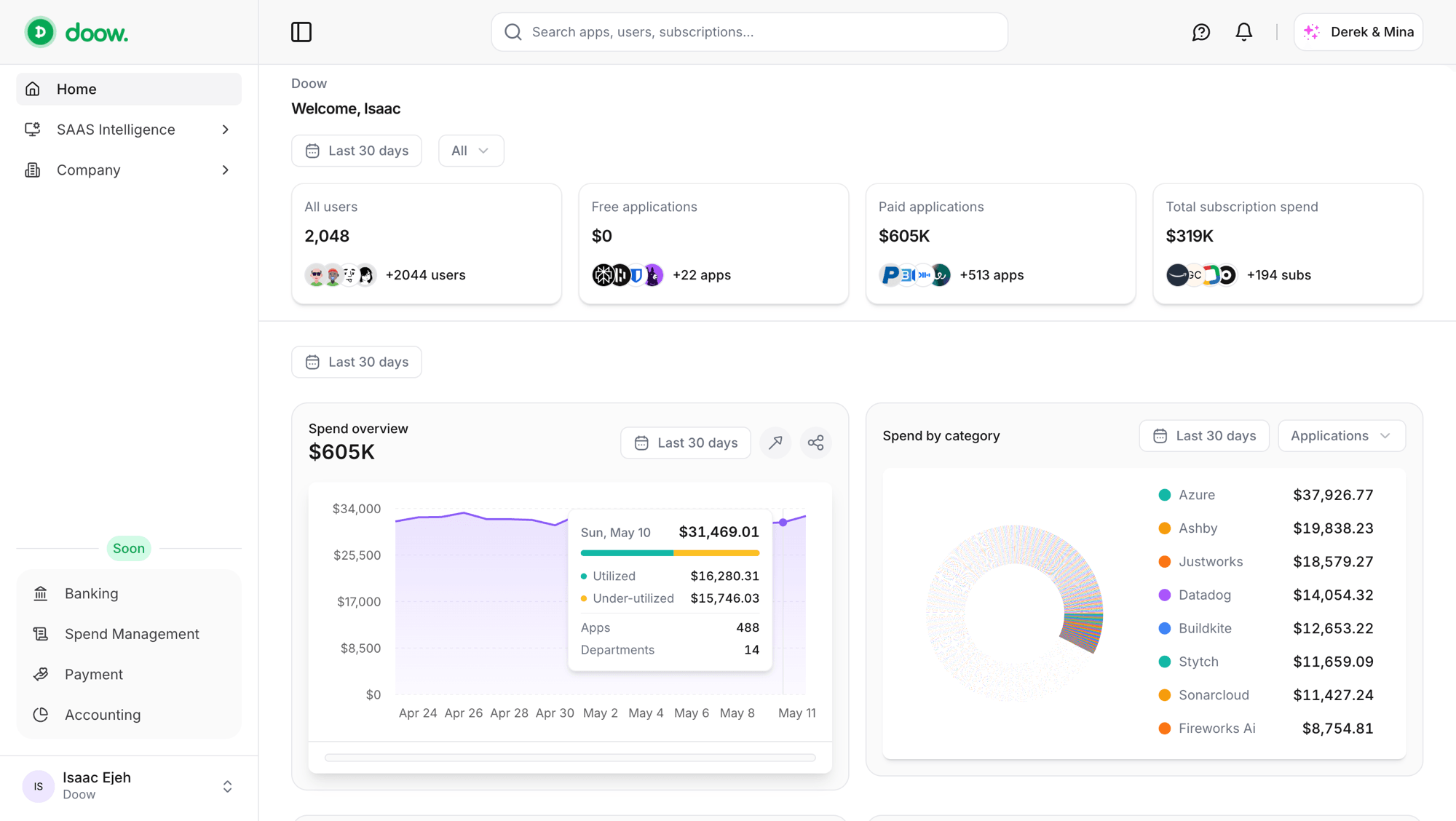
Now, the question is — how do we give the right information and financial access to the right people within the business, so everyone is able to make the right decisions in real time as possible? This is where Doow comes in.
Regardless of where an employee is, what currency they need to spend money in, who needs to approve the spend request, or which expense category the transaction needs to be tagged under in the GL, everything can happen in one place — Doow. Our northstar is to help businesses consolidate all their global payment workflows (AP/AR) and non-payroll spendings that are siloed across multiple disconnected systems, into a seamless all-in-one experience for employees and more importantly for finance, accounting, and executive teams.
Non-payroll spend??? What’s that?
In every company, there are two main categories of spend/expenses — payroll and non-payroll. Our accounting experts may disagree with this categorization, as they would prefer to categorize expenses into operating expenses and non-operating expenses on a financial statement. However, considering the availability of software tooling for managing company spend/expenses at the pre-accounting phase, we will stick to (i) payroll spend and (ii) non-payroll spend, as our key categories of company spend.
Payroll expenses are the costs your business incurs when you pay employees or contractors for the value they provide to your business. In addition to salaries and wages, your payroll expenditure includes all kinds of compensation and benefits you provide to your employees, such as pension and retirement plans, health care plans, bonuses, commissions, or even payroll taxes you pay to the government.
For managing payroll expenses globally, we have popular payroll and HRIS platforms such as Deel, Rippling, Sage, and Gusto. There are also payroll platforms available in Africa, such as Bento Africa, Pade, Seamless HR, CadanaPay, as well as Nigerian business neobanks like Kuda Business and Brass HQ which are able to run payroll in Nigeria. At least for now, Doow isn’t focused on competing in the payroll management space.
On the other hand, non-payroll expenses are the costs your business incurs to run and maintain business operations, excluding employee salaries and benefits. All of your costs that are not related to payroll, such as office space rental, SaaS subscriptions, employee reimbursements, vendor invoices, travel and entertainment expenses, internet bills, and other utilities, can be grouped as your non-payroll expenditure.
When it comes to managing non-payroll spending globally, we have business neobanks and/or spend platforms like Revolut Business, Brex, Ramp, Spendesk, Divvy, Rho, and Airbase that choose to serve either European businesses or US-based businesses whose founders have SSNs or EINs.
Currently, there’s no dedicated platform for startups and large corporations in Africa to manage their non-payroll expenses and financial reconciliation within and outside the continent. We only have SMB-focused and country-specific startups like Bujeti (which recently joined Y Combinator and launched in Nigeria), Churpy (which is planning to go live in Kenya), Sava (which is planning to go live in South Africa), Flex (which is live and serves NGN-based spending), and Tyms (which recently pivoted from AjoPay). These companies don’t support multi-country financial operations.
Global needs, global spend
Whenever people talk about Covid and how it changed financial operations within companies, they tend to focus primarily on remote work and the bottlenecks associated with handling distributed payroll. However, even businesses without a global workforce still find it challenging to manage payments in multiple currencies, as their bank accounts and payment networks are localized, and debit/credit cards aren’t designed to handle international B2B payments at scale.
Business spending is happening everywhere because your suppliers and SaaS vendors are distributed across multiple countries. Thus, companies are forced to manage multiple local currencies, banking and payment rails, tax requirements, and even accounting in each country. As a technology company, you can’t avoid onboarding foreign suppliers and SaaS vendors, even if you don’t expand your product offerings to new countries or markets. Your payment needs are global even if you don’t sell global products or services.
For example, being a Kenyan startup that only serves Kenyans doesn’t mean that all your spending and currency needs will be domiciled in Kenyan shillings. Let’s say your Kenyan startup has contracts with a cloud hosting service like Vercel, a design tool like Canva, and a sales CRM platform like Zoho. In order to settle these invoices locally without moving money internationally, you would need access to USD, AUD, and INR.
To effectively manage global financial operations, companies must be able to think and plan locally in all the markets where they have the highest volume and frequency of payments and expenditure. However, when most companies think locally, they often end up accumulating multiple bank accounts, corporate cards, and procurement systems that work in one country but not in other countries where they still need to make payments.
The thing is, to enable your workforce to spend on the right things as the need arises, your company must be able to support multiple currencies and adapt to regulations, policies, and accounting in each local market without having to use 5–10 separate systems.
Centralizing your local currency budgets, expense policies, pre-coded vendor cards, invoices (AP/AR), and reimbursements makes it easier for your business to spend globally. In other words, you can create separate spending budgets and expense policies for different countries or currencies, track your spending against those budgets in real-time, pay suppliers, and reimburse employees regardless of where they need to spend money.
Spending habits and culture: A thin line between good and bad
Poor spending visibility in a company almost always translates into a poor spending culture. The majority of the time, it starts as a mistake, possibly because there are no policies or standard processes, then it becomes a habit, and eventually becomes the norm (culture).
A company’s spending culture isn’t what is written down in policies, it’s what plays out in reality as people spend money. From manually managing budgets and policies in spreadsheets, to managing policies, invoices and expense reports on paper, to managing email and Slack approval threads that go unnoticed for weeks — this is how a poor spending culture is entrenched throughout a company.
Spending habits don’t just become culture in isolation, culture is shaped by context. If your team continues to spend in the same way over time, under the same conditions, policies, and processes, it becomes so natural and hard to alter. The thing is, changing spending habits within a company is a challenging process that requires conscious effort from everyone involved because you can’t just order people to change their behavior. More so, you can’t change what you don’t measure and understand. You can only know where you’re overspending and underspending if you track your spending as they happen.
The fact is, every company develops its own spending culture as spending needs and priorities evolve over time. This is because every business exists in its own unique set of circumstances, whether it’s headcount, industry, target market, product, or even marketing strategy. Companies tend to manage their finances differently because they’re made up of different people, and a company’s spending culture, whether good or bad, is a dynamic average of the combined spending behavior of the people within the company.
Hence, no two companies will spend money in the same way even if they’re in the same industry and compete for the same set of customers. For example, Stripe and Adyen are both payment processing companies, but they have different spending cultures and have taken very different approaches to growth. Stripe spent exorbitantly on hiring and new product development in the years leading up to 2022, and this caused Stripe’s expenses per employee to be twice as high as Adyen, when Adyen’s revenue per employee was relatively higher. As a result, Stripe had to lay off 14% of its workforce, or around 1,120 people, in late 2022 to reduce costs.
Unlike Stripe, which is headquartered in San Francisco, Adyen, which is headquartered in Amsterdam, also had a smaller workforce of around 2,575 at the time and didn’t have to lay off any employees. However, Adyen entered growth mode from mid-to-late 2022 and increased its workforce by more than 15%, peaking at 3,883 full-time employees, and causing their compensation expenses to grow by more than 80% in 2023.¹ Now, I’m not trying to compare the expenses, revenue, or profit of these companies, and I can’t even predict who will win in the end. I’m simply trying to show you how no two companies will ever spend the same way, even if they’re in the same industry.
Companies will always manage their finances differently. Company A might be a free spender who believes in momentary spending because their decisions are overly influenced by the most immediate spending needs, while Company B might be a “hoardy” spender who always wants to keep cash for future needs and expenses. However, there are drawbacks to being either of these two companies. The best way to spend is to consider your context and then decide how to spend accordingly. You can spend like company A today and spend like company B tomorrow — your spending should be contextual to your needs and the timing.
The thing is, companies are more likely to overspend and incur avoidable costs if they don’t have a way to track spending from one place. When there’s no concerted effort to drive visibility and transparency, and employees can’t view all of their spending, there will be countless ways for money to be wasted or stolen, and it will likely go unnoticed until it‘s too late. The secret to creating a healthy spending environment is to have real-time visibility and transparency into how your company spends money. This will empower your employees to make the right spending decisions and hold them accountable for their actions.
It’s highly important to keep track of the who, the why, the what, the where, and when for every transaction that happens within your company because your internal processes have a direct impact on company-wide spending habits. Employees develop their spending habits by observing the actions and examples of their teammates, managers, and even the C-level. More so, the quality of a company’s spending culture heavily depends on the CEO’s worldview and the behaviors they act out.
The best way to establish a positive spending culture in your company is to build trust as you’re enforcing more control, because you can’t just shout and micromanage your way into a good spending culture. By implementing tools that enforce compliance with spending policies without adding extra manual work for your team, you make it simple for employees to be transparent and held accountable. We’ve designed spend management to be easy and real-time for everyone in a company by centralizing budgets as the nucleus of how spending happens, with built-in compliance and automated policies.
Doow allows you to create unlimited main and nested budgets in multiple currencies — you can connect funding sources and spending routes to these budgets, and assign both amount, vendor category, and vendor limits to these spending routes. You can create budgets for different teams and for specific purposes, such as a one-time project, your team’s offsite, or even a single employee. These budgets will be automatically governed by your set policies, custom approvals, and any other automated rules and workflows you choose to create. This way, you’re able to see how your business is spending as it happens — you can see which employees or teams are spending the most, what they are spending on, and which vendors they are using.
C-level and employee fraud
There’s more expense fraud happening in companies than most employees and C-level executives are aware of. According to a 2022 report by the Association of Certified Fraud Examiners (ACFE), companies worldwide lose 5% of their annual revenue to occupational fraud, totaling $4.7 trillion that’s lost annually. And more than 20% of these companies report losses of at least $1 million, while the average loss for the other companies is $140,000 per year.²
In most cases, fraud committed by founders, CEOs and other C-level executives is both an effect and the cause of poor spend management practices and culture. Whether it’s expanding into culturally different regions where you’ll never successfully launch, just to incur legitimate-looking expenses to cover up for illegitimate expenses you’ve incurred in the past. Or taking unapproved personal loans from the business, issuing backdated or inflated contracts to acquaintances, or outrightly masking personal expenses as business expenses — it always starts with one bad decision that cascades into a series of poor financial decisions over time.
The thing is, “god” and humans may ignore or forgive your wrongdoings, but your nervous system will never forgive and forget — it gradually keeps the score of your actions whether you like it or not. The best way to not get caught up in a series of fraudulent and poor financial decisions is to not even get started in the first place. One compromise here, another compromise there, and you’ll be on your way to staying fraudulent. It’s that simple.
For example, there’s no way the massive fraud committed by the former CEO of Germany’s Wirecard could have been avoided when they manually managed their banking ledgers on spreadsheets, and settled transactions with different business partners by sending physical cash in grocery bags just to evade traces.³ There was nothing transparent about how Wirecard moved money and managed spending from day one.
When executives commit fraud, the average loss is ten times higher than when employees are the perpetrators, according to the ACFE. The fact is, you may occasionally make the right product decisions by following your gut, but when it comes to managing business finances and having a comprehensive view of your cash and revenue cycles, it’s better to objectively acknowledge reality by relying on actual, real-time data of your finances.
In 2015, the SEC charged Andrew Miller, the former CEO of Polycom Inc., with expense fraud and misappropriation of nearly $200,000 in corporate funds for his personal use. The personal expenses in question included trips to Bali and other luxurious international locations, limousine rides for his girlfriend, tickets to baseball and football games, and even the purchase of home accessories that he falsely claimed were for Polycom’s San Francisco office.
Andrew submitted hundreds of fake expense reports that falsely described his personal expenses as business expenses. For instance, he falsely claimed that his personal trips were business-related sales trips and he created bogus budget line items to support these claims.⁴ In the same way, the former CEO of Hendricks Power Corp was also sentenced to 33 months imprisonment in 2017 for stealing over $580,000 from the company by falsifying his expense reimbursement reports for six years.⁵
Whenever you come across expense fraud, it’s almost always an effect of a poor spending culture. Employees who are willing to commit expense fraud are more likely to commit even more fraud if they believe they’re not being monitored or held accountable for their actions — it’s a never-ending loop.
There are so many ways employees can commit expense fraud. They can submit fake receipts for expenses that were never incurred, submit reimbursement claims for expenses that weren’t approved, or submit multiple reimbursement requests for the same amount. According to the ACFE, expense reimbursement fraud accounts for 21% of fraud in businesses with fewer than 100 employees and 11% in businesses with 100 or more employees.⁶
However, all of these can be avoided if there’s a centralized source of truth that tracks and manages how expenses and reimbursements happen within the company. To make this possible, we have implemented deep payment integrations (DPI) with the card networks, so we can validate a card transaction receipt directly from the card network and then compare it to the receipt that an employee is submitting for claims/reimbursements before either approving or declining that request.
Fraudulent vendor invoicing and wasted SAAS subscriptions
The extent of financial and culture damage caused by purchase order (PO) and invoicing fraud is usually proportional to the complexity of the fraud and how long it has gone unnoticed. The more complex a fraud scheme is, the more difficult and time-consuming it is to detect. And by the time the scheme is uncovered, it may have cost your company hundreds of thousands or even millions of dollars.
Vendor fraud can be perpetrated independently by a vendor or an outsider without the assistance of people within a company. However, more often than not, vendor fraud almost always happens in collusion with one or more internal employees. These internal perpetrators have access to a company’s accounts payable and banking software, so they can fraudulently approve overstated invoices to either fictitious or real vendors in order to steal the overstated goods or amounts.
For example, in 2016, Kimberly Miller was sentenced to 36 months in prison for failing to report an income of $2.3 million which she unlawfully and fraudulently received from her employer (RSMAS) while she was director of finance. For 10 years, Kimberly was in charge of managing and approving payments for RSMAS’s vendor invoices, but she abused her authority to run an embezzlement scheme instead.
She stole a total of $2.3 million by creating fake invoices to make it look like they came from a legitimate supplier called “International Assets.” She altered the original International Assets’ invoices by changing the company name to “Inter, Inc.,” and then sent payment checks to this fictitious company, knowing that the checks would be returned because the address was invalid. After the bounced checks were returned to RSMAS, she deposited the fraudulent Inter, Inc., checks into a separate business account called “International Oceans, Inc.,” which she operated and had full control over.⁷
The reality is, there are so many ways in which vendor fraud schemes can be carried out. AP employees and/or departments can process multiple payments for a single vendor invoice, vendors can issue invoices with overstated values that differ from the amount on the PO or contract term for that invoice, payments can be made to unoriginal invoices, or without supporting invoices just like in Kimberly Miller’s case, the list goes on.
With an understanding of all these bottlenecks, we’ve designed our PO/invoicing product to truly be a centralized hub for managing both AP/AR payments, regardless of the number of vendors you need to onboard or the number of approval steps required within your company. We’ve automated every step of the accounts payable and receivable process, from purchase requisition to generating and managing purchase orders, quotations, contracts, invoices, and even receipts. This way, any company can have a digitally verifiable audit trail for every purchase, transaction or payment.
On the other hand, when you consider how companies amass thousands and millions in wasted subscription spend, it comes down to how they manage procurement and purchases internally. Many companies have a decentralized approach to SaaS procurement, which means that different teams are responsible for purchasing their own software. But this can lead to a lot of duplication, late cancellation and waste, because different teams may be purchasing the same products or features but from different vendors.
For example, an employee might use their company’s general credit card to pay for software they intend to use only once, but then forget to cancel it, leading to unnecessary recurring charges on the company’s card. This problem is further compounded when another employee on the same or a different team later pays for the same software, since there’s no way for them to know if the company already has an existing subscription with that vendor. Your product team might be using Notion for project management, while marketing might be using Coda for project management when either of the tools could perform the same tasks for both teams.
The thing is, as companies grow, they tend to use more and more SaaS software across different teams. So there’s a high tendency that you’ll end up paying for more than one product that serves the same purpose especially when subscription requests and approvals are managed by multiple employees all at once. More so, you may still be charged for a former employee’s seats even if you revoke their access to your software platforms, because their fees are already included in the monthly or annual contract invoice that your finance team approves.
The question now is: How do you know when to stop spending and turn off certain features and/or products that are being underutilized? And how do you know when you need to invest more in certain features or products based on how often your team uses them or how valuable they have become in your tool stack?
We can integrate with your company’s authentication service provider to track and analyze your SaaS usage by products, employees, or teams. This allows you to know which platforms each employee is logging into and how often they are actually using each platform and feature. You can organize your subscriptions by product categories, such as productivity, communication, and finance, to compare the features of each subscription and identify areas where your team is paying for overlapping features. This way, it’s very easy for you to audit all your subscriptions in real-time, consolidate your spending into as few platforms as possible, and avoid overpaying for underused SaaS licenses.
When an employee leaves, we automatically cancel any active cards or subscriptions that were tied to them and adjust your billing accordingly. This is possible because we have integrated with some of the most popular HRIS systems, allowing us to monitor employee departures as they happen. Doow truly streamlines and automates all of your SaaS spending into a single, seamless process, while enforcing your company’s unique expense policies.
Centralized budgets and policies
We’ve designed budgets and policies to be the core of how spending happens on Doow. Budgets provide teams with the necessary flexibility and also limitations within which to spend, because they know the exact amount that’s available to them and can plan their spending accordingly in multiple currencies.
Instead of allowing everyone to spend directly from your corporate accounts, a more efficient and transparent way to keep track of who is spending what and why, while holding them accountable to set limits and policies, is to manage spending at the budget level. We believe that the most effective way to prevent expense fraud is to have clear and consistent spending policies that cover all categories of spending within your company, and can also be automatically linked and applied to all spending sources, including budgets, bank accounts, wallets, and cards.
Doow allows you to create policies and workflows that automatically define what each employee and team can spend on, which vendor categories they can spend on, when they can spend, and even how much they can spend. Before any money is spent, our system checks for all policies and workflows associated with that spending source or route, and then decides whether to authorize or deny the transaction. If the transaction violates any of your set policies or conditions, it will automatically be declined.
Every spend can be managed from a budget — you can create main budgets for teams and vendors, and you can also create nested sub-budgets for one-time spending needs like projects, trips or any other nested category spending. For instance, under your marketing team’s budget, you can create separate sub-budgets for Facebook ads, SEO, or even billboards/out-of-home advertising. The choice is yours depending on your needs.
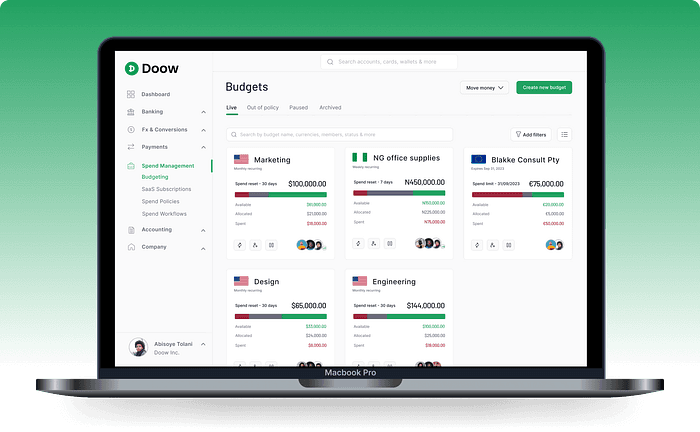
The closer your spendings align with your budgets, the fewer expense and reimbursement reports will be required from employees, and the more real-time control you’ll have across every spending category in your company. When you have complete visibility into your spending, you can easily identify fraud and know where to make budget cuts that will reduce wasteful spending without disrupting business operations. The more closely you monitor your spending, the less likely you are to overspend, and the easier it’s to identify and address any areas where you’re spending more than you should.
Employee and vendor cards
The current card experience in most companies is that they own a corporate debit/credit card that’s directly linked to the company’s main corporate account, so all employees have to share the same card, and every expense, whether it’s for an Uber ride, or a cloud subscription, is charged from this card.
The issue with this approach is that the more times a company’s main card is shared across different teams, the greater the risk of expense fraud and wasted subscription spend. When multiple teams share the same company card, unexplained expenses are likely to be incurred and unexpected recurring subscriptions are likely to be charged before anyone realizes.
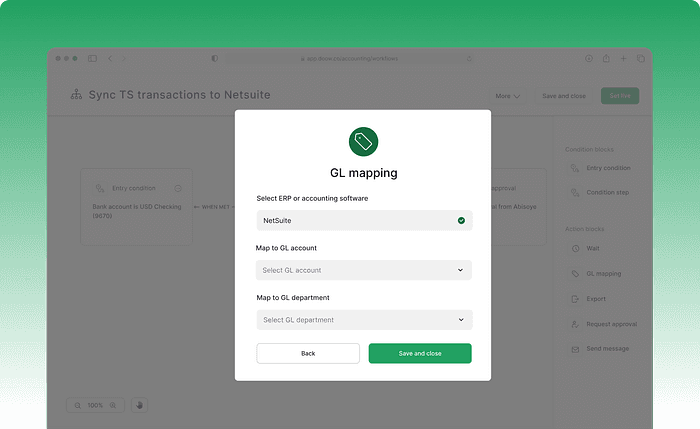
The way we’ve designed card transactions to happen on Doow is different. You can create and issue unlimited multi-currency virtual cards in seconds, each with its own set of spending rules and limits. You can also pre-code conditions that will automatically map successful transactions to any specified GL account, department or category in your accounting software. You can link or assign separate cards to an unlimited number of budgets, employees, teams, software vendors, and/or vendor categories, and you can also set automatic spending limits on these cards.
For example, you can create a card with a spending limit of $6 and set a transportation services category limit on this card, restricting it to only be used for Uber transactions. This way, any other transaction made with this card will be automatically declined. If an employee needs to travel for work, you can create a budget for them, connect a spending card or wallet, and issue them a fixed daily allowance that is replenished each day. If your marketing team has an advertising budget, you can set a vendor limit on the associated virtual card and also set a weekly or monthly advertising spend limit, whichever works best for you.
We’ve partnered with card issuers that have extensive integrations with the card networks, so we can automatically generate receipts for most card transactions, and sync them to the correct expense category without requiring your employees to manually submit physical receipts for each transaction. We’ve also made our OCR receipt capture process to be as seamless as possible, with customizable email and/or text notifications to remind employees who may have successful card transactions without attached receipts. This is in case any receipts are missing.
The CFO’s office
Employees and finance teams have different approaches to spending. Employees are more concerned with the expenses they must incur to solve business problems than with the reconciliation details that finance and accounting may care about, such as the type of expenditure, the budget it came from, the card that was used, or the GL account it should be categorized under.
Finance and accounting, on the other hand, are responsible for ensuring that all financial transactions are properly recorded and that the company’s financial statements are accurate. As such, they need to know more than just the total amount spent. They also need to know who spent the money, which vendor it was spent on, whether it was within the specified budget and policy, and whether it has the correct approvals and reconciliation receipts.
For example, if an employee spends $5,000 on a new work-from-home setup, finance and accounting will need to know who authorized the expense, which vendors the items were purchased from, if the purchase was within the company’s WFH budget, if the purchase was approved by the right people, and if the company has all the receipts for this purchase.
All of this information is highly important as it helps finance and accounting to stay on top of all company spending, identify potential fraud such as unauthorized spending or purchases that aren’t within budget limits, ensure that the company is complying with all applicable laws and regulations, and prepare the company’s financial statements.
Tracking transactions and account balances is an essential part of managing every company’s financial health. However, tracking company spending across multiple systems or spreadsheets will almost always give you an outdated and inaccurate picture of your overall financial performance. As such, the fewer platforms finance teams have to manage to close their books, the better.
Doow makes reconciliation a breeze by consolidating all your transaction data from different spending sources, so employees don’t have to worry about submitting receipts and expense reports every time, and finance teams don’t have to worry about month-end closing. All of your transaction data is automatically collected and organized, allowing you to quickly and easily see where your money is being spent.
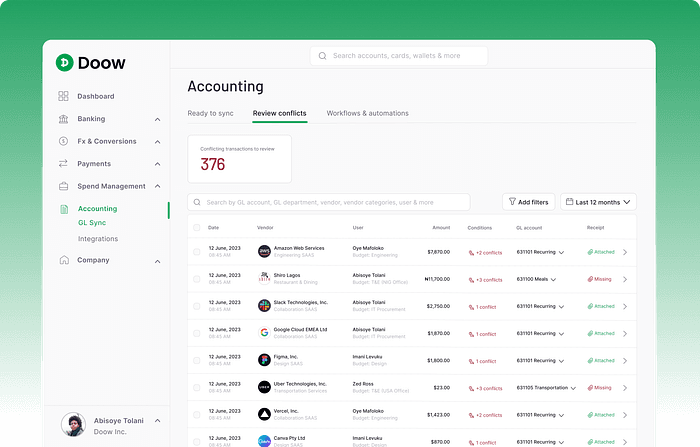
Our pre-coded rules and conditions automatically sync all expenses to your general ledger in real time, saving you a lot of processing time and effort. It only takes a few clicks to set up these rules, and you won’t have to manually enter your expenses into the GL as long as you set them up correctly. Our platform is truly global, allowing finance teams to see their company’s spending across entities and currencies in a single dashboard.
Multi-country banking and payments
Most customers, especially businesses, rarely change banks, and this allows banks to collect years of customer transaction data and behavior. Banks rely on this data to make decisions about everything from risk management to lending to investments and even developing new products and customer experiences.
If you agree that your budget should be the nucleus of how you spend money within your company, then you can think of your corporate bank account as the DNA that sits within your nucleus (budget) and gives it life and form. Your budget is like your Google map — it shows you where you’re going and how you’re going to get there, while your bank account is like the fuel in your car — it keeps you moving.
The fact is, it’s impossible for us to build an intelligent spend management platform like Doow without access to layers of structured and unstructured financial data from banks and the card networks. Just as DNA contains all of the information necessary to power a living organism, your corporate bank account contains all of the information necessary to run your financial operations. Just as banks rely heavily on your financial data, we also rely on your data to make decisions. We need to access your account information, account balances, and even transaction data to make informed decisions in real time.
Serving the banking needs of startups in their early days, such as setting up their first USD corporate checking or savings account and issuing their first debit/credit card, is a long-term investment for Doow. This is because we’ll have access to their financial data from day one, allowing us to grow with these startups and provide tailored banking and finance solutions as they succeed.
However, early-stage startups typically don’t have a lot of expenses, as their primary need may be to receive their first check from investors to settle basic card payments for software subscriptions. Hence, our ideal customer would be a Series A, B, or C company that already owns some corporate bank accounts, with a scrappy finance team that is under pressure from their CEO and board to manage and report their financials more clearly and timely.
We offer both local and international banking/payment services to companies that are incorporated in their home countries and also abroad (United States, United Kingdom, parts of Europe, and/or parts of Africa). For companies that are only incorporated in their home countries, we offer local banking/payment services, and then offer currency wallets/virtual accounts that will connect them to international banking/payment rails like BACS, ACH, KEPSS, SWIFT, UNIS, SEPA, NIBSS, M-PESA, and more.
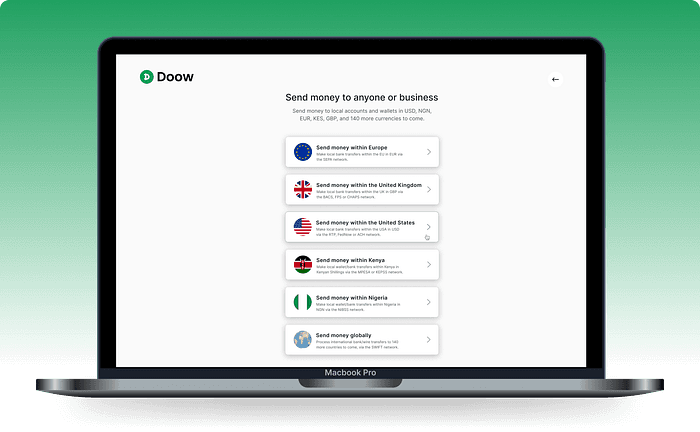
Is Doow live?
When we started building Doow in December 2022, we planned to launch our closed beta in August 2023, but things didn’t go according to plan. We’re now working tirelessly to meet our new target of launching in Q2 2024, according to our revised roadmap and timelines.
When we began development last year, we decided to build our banking and wallet infrastructure for Doow 1.0 before adding our spend management, accounting automation, and payment ops(AP/AR) products on top of Doow 1.0 to launch Doow 2.0. However, we made the tough decision to change our strategy.
Our sponsor banks require us to raise several million dollars and maintain a few hundred thousand dollars in liquid cash in order to go live on their banking rails. With the current market conditions, it will be hard for us to meet these requirements before going live on our proposed launch date.
In hindsight, it seems that we were attempting to take the easy route by focusing on early-stage startups because it would have been much more difficult to sell to late-stage CFOs and finance teams. This is because late-stage companies typically have more complex financial needs and are more likely to own corporate bank accounts already. As a result, they’re more risk-averse than early-stage companies and may be less willing to try new products.
We’ve changed our plans and will be launching our basic spend management (budgets and cards), accounting automation, and invoicing payment (AP/AR) products for Doow 1.0. Then we’ll go back to building our global banking and wallet infrastructure with our chosen sponsor banks in preparation for the launch of Doow 2.0.
We’ve partnered with leading open banking providers in the US, UK, parts of Europe, and parts of Africa so that our customers can link their existing corporate bank accounts as funding sources for the budgets they’ll create on Doow.
We’re currently an 8-person team of dreamers, doers, and professionals with a proven track record of building software for millions of customers in financial services and other leading industries. We’ve a unique set of skills, experience, and expertise across different fields, including finance, engineering, product, and design. We truly understand the challenges of building software solutions in financial services and have the experience to overcome them successfully.
We hope you’ll love using Doow as much as we love building it for you. Let’s work together to meet the unique financial needs of your business. 💚
For now, here’s what to do:
- Please, spare 7 minutes to complete our product research chat if you haven’t already. You’re welcome to share the link with whoever you think would provide mind-blowing insights.
- If you haven’t joined our waitlist or know someone who would benefit from using Doow, please invite them to join our waitlist.
- Do you have any questions, comments, or requests for the team? You can send us an email [hello[@]doow.co | isaac.ejeh[@]doow.co] at any time and we’ll respond immediately.
- You can check out our website here. P.S. Our website and positioning is due for a revamp, but that’s not top priority for us right now. But best believe, we’ll get to it really soon.
I’m glad you stuck around to this point. If you enjoyed reading this, feel free to connect with me on LinkedIn and follow me on Twitter.
Notes
- Financial Times. Payments group Adyen’s shares plunge almost 40% after profits disappoint. Retrieved August 25, 2023, from https://www.ft.com/content/53b5099c-4f59-499e-9713-09c04a452c18
- Association of Certified Fraud Examiners. Occupational Fraud 2022: A Report To The Nations. Retrieved August 25, 2023, from https://legacy.acfe.com/report-to-the-nations/2022/
- The New Yorker. (2023, February 27). How the Biggest Fraud in German History Unravelled. Retrieved August 25, 2023, from https://www.newyorker.com/magazine/2023/03/06/how-the-biggest-fraud-in-german-history-unravelled
- US Securities And Exchange Commission. (2015, March 31). SEC Charges Former Polycom CEO With Hiding Perks From Investors. Retrieved August 25, 2023, from https://www.sec.gov/news/press-release/2015-53
- Greenwalt. (2017, March 20). Why Boards Should Watch CEO Expenses. Retrieved from https://greenwaltcpas.com/2017/03/why-boards-should-watch-ceo-expenses/
- Association of Certified Fraud Examiners. Global Study on Occupational Fraud and Abuse 2018: A Report To The Nations. Retrieved August 25, 2023, from https://s3-us-west-2.amazonaws.com/acfepublic/2018-report-to-the-nations.pdf
- US Attorney’s Office Southern District of Florida. (2016, August 16). Former University of Miami Director of Finance Sentenced for Tax Evasion. Retrieved August 25, 2023, from https://www.justice.gov/usao-sdfl/pr/former-university-miami-director-finance-sentenced-tax-evasion